




The purchase price of a cathode is visible. The operating consequences of that decision accumulate quietly over years.
Look beyond the initial purchase
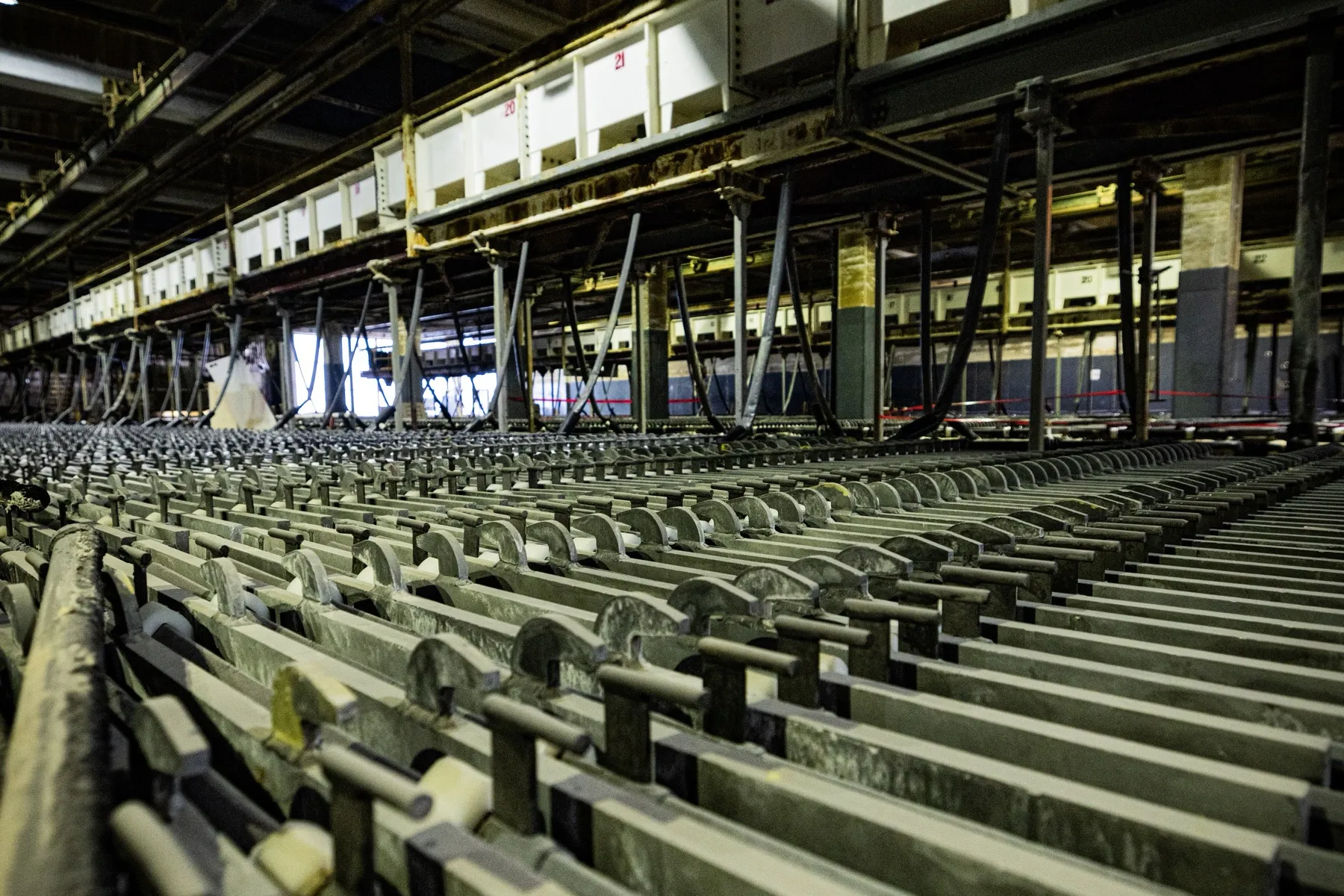
Cathode selection influences electrical performance, production stability, handling, maintenance requirements and replacement frequency. A lower upfront price may be attractive, but it represents only one part of the economic equation. The more useful comparison considers the cathode’s complete working life and the operational risk it introduces or removes.
Designed for sustained electrical performance
LIMPACT products are engineered around the integrity of the current-carrying pathway. Connection design, materials and manufacturing consistency are intended to support reliable conductivity over time. For customers, the potential value is not an abstract laboratory result; it is greater confidence that the fleet can support production targets as it ages. By connecting the head bar to a 400A power source, voltmeter probes can be applied to the contact and a point on the head bar 150mm from the end of the bar to test the voltage drop across the copper-aluminum or copper-stainless steel bond. Less than a 1.5mV drop should be detected prior to cathode use, and any increase in voltage drop over time means increased resistance across the bond and a commensurate loss of current efficiency.
Durability in demanding service
Permanent cathodes face repeated mechanical loads, aggressive chemistry, contact cleaning, stripping and handling. LIMPACT designs products for those real conditions, with attention to structural integrity, alignment and repairability. Longer, more predictable useful life can reduce emergency purchases, unplanned replacement and the disruption caused by poor-quality units circulating through the plant.
Better fit with plant processes
Cathodes do not operate in isolation. LIMPACT evaluates the cell geometry, current density, chemistry, stripping method, crane and conveyor interfaces, edge strip system, contact interface and maintenance practices that influence performance. That application-specific approach is especially important when a plant is converting technologies, increasing current density, automating or addressing a persistent bottleneck.
A refurbishment pathway
Lifecycle value improves when an asset can be inspected, repaired and returned to service economically. LIMPACT’s service capabilities are designed to help customers recover value from eligible cathodes, extend fleet life and plan replacements more deliberately. With a network of service centres around the world, LIMPACT works with customers to evaluate the condition of their used cathodes and identify those that are suitable for refurbishment. Using LIMPACT’s proprietary explosion bonding technology, aluminum head bars can be reused for up to 9 years and copper head bars can be reused for more than 20 years, extending the useful life of a critical asset without sacrificing performance.
A controlled conversion
Switching does not always require replacing an entire fleet at once. LIMPACT can help define a phased pathway: baseline the existing fleet, identify the highest-risk population, establish technical acceptance criteria, introduce trial cathodes, measure results and scale the conversion according to operational and capital priorities. This approach gives technical, commercial and finance teams shared evidence for the decision.
The outcome that matters
The purpose of switching is not simply to own a different cathode. It is to create a more reliable production asset—one that supports stable operation, gives maintenance teams better options and delivers stronger value over its service life.
“These [cathodes] have really been a real blessing to us all the way around. Absolutely. More production. More safe production. More metal recovered. Production went up 26%. That’s the number. That’s the real number.” — J.D. Redden, Zinc Superintendent (Electrolysis Division), Crucible Zinc
Request a lifecycle comparison or discuss a phased trial with LIMPACT.